


Today I wanted to talk about the continuation of what we had spoken about before. This involves a few different ingredients in the analytical theory that I invented, which is called Disinfolklore. Disinfolklore is both an analytical theory and a way of seeing. It’s a description of a new form of narrative. It’s also a way of cutting through Russian disinformation, in particular in the context of the Ukraine war. However, it is an aspect of our culture which can be used in different contexts.
As ever, I thought I would quickly go through some of the things I wrote this week.
I wrote earlier in the week — which is quite apt today because I see a couple were arrested and charged by the Polish police, one or both of whom are associated in some respects with the Navalny opposition campaign. I don’t think it’s going to be very surprising to many of us who operate in the Ukrainian information space. It would have been a surprise to me a couple of years ago. I don’t think it would have been a surprise to many Central Europeans a couple of years ago, but it certainly is no surprise to me today.
I’ve written a lot on the so-called Russian opposition and the mechanism which Russia, and really all trolls and con people, use — which is to establish trust. In the context of the Russian opposition, they generally persecute them, torture them, kill their family members, put them in jail. And then our political leaders spend very scarce political capital getting them released. This dance goes on constantly.
We saw a variety of so-called Russian oppositionists being warned not to go to Russia. And if they go to Russia, they’ll be killed or imprisoned. Lo and behold, they go to Russia and they are killed and imprisoned. And then our leaders swap KGB people in our prisons for KGB Russian oppositionists. I just find the whole thing absolutely maddening — that we can’t see through this, or that many of our leaders can’t see through this.
I’ve referred to these Russian oppositionists as a perennial Russian opposition Disinfolklore character, because the Russian secret police has been using the same tactics for 150 years to break up groups.
I wrote a piece on “Russians Panic About Their Ethnos Disappearing.” I hadn’t actually come across this word “ethnos” until about a year ago, when Putler himself was doing one of his characteristic grievance-mining trolls, trying to explain why Russia had to attack Ukraine — that if they didn’t do it first, NATO and Ukraine would attack them. Putler was saying: “I don’t even know if such ethnos as the Russian people can be preserved as it is today.” That’s supposed to scare people.
But actually, as Russia disintegrates into five or six sovereign states over the coming months, Russians worrying about their ethnos disappearing ought to be reassured — and here I am concern-trolling — that China assimilated the Manchu so successfully that today it’s hard to find anyone in China who identifies as Manchu, even though the Manchu Qing dynasty ruled China from 1644 to 1912. Similarly, the so-called Russian ethnos will be subsumed into Chinese identity quite quickly. So Russians have no need to worry about that. Staying warm and fed this winter — now that’s something to worry about.
It often is a tragedy when particular minority groups in the human community disappear. But only about 194 of them, if we take the nation-states recognised as nation-states, of the thousands — probably tens of thousands, hundreds of thousands perhaps — of identifiable human cultures have existed over the past 10,000 years. The Russians have had a good run of it. They had 300 years. And honestly, if they go the way of the Manchu and are subsumed by the Chinese, I don’t think they’ll find many tears in the pro-Ukraine information space. I’d like to run this campaign, which I started here. I don’t know whether it’s going to catch fire, but we’ll see.
“How NATO Can Prepare for Today’s Wars.” Probably the only way militaries will innovate, commensurate with the challenge facing them, is if — as I still maintain might well happen — Ukraine, Poland, maybe Turkey, Baltic states, aided by Finland, Scandinavians and Nordics, and who knows what way Donald’s going to swing in the end anyway — they might all unite and eject Russia from 100% of Ukraine. Otherwise, our militaries appear to be wishing drone warfare will just disappear.
Military leaders, mostly retired, I read a lot of these days — like General McRaven — understand virtually everything: from institutional procurement, structure of units, electronic warfare — everything needs to be transformed within NATO armies. Naturally, conservative armies don’t change unless they’re at war.
So we have Magyar, for instance, pictured today — or maybe yesterday, I saw the photo today — having medals presented to his Birds by President Zelensky in their command HQ somewhere in the east. That’s the kind of stimulus we need for innovation in our militaries. The era of the gamer soldier is nigh.
We saw over the weekend Magyar’s Birds had this incredible operation in Tuapse, a port for exporting oil. And across Russia there were all of these other attacks. No other army in the world has that capability — all the while eliminating hundreds of Russian invaders across a 1,400-kilometre contact line every day with thousands of drones.
Frankly speaking, none of our militaries appear to be doing anything commensurate with the demands of future warfare. And maybe the only way they’ll be able to is by helping Ukraine eject the Russians from Ukraine — “for the sake of information,” as the English newspaper The Economist put it in 1854, when it wrote about the First Crimean War and the four perennial weaknesses in the Russian army. It suggested that Britain should go to war against Russia then. There was a lot of chatter. It took a year or two — a long time — for all the allies to unite: the Sublime Porte Ottoman Empire, the Austrian Empire, Sardinia, Great Britain and Ireland, and France.
At that point, this Economist article begins: “It’s about time we went to war with Russia for the sake of information.” And it tells the same story Russia has today. We’ve talked about it before with archetypes. Russia has archetyped itself as strong, invincible. And this is in many ways the big troll.
The last piece I wrote this week is quite a serious one: “Russia’s Core Competency: Industrialisation of Suicide Bomber Creation.” Sculpting suicide bombers out of ordinary humans used to be an artisan trade. Russia learned it from Assad’s father, who perfected the art. Every day since March 2023, 1,000-plus Russian soldiers, knowing they will be killed, have executed assaults in Ukraine which are doomed to fail. How does Russia get ordinary humans to participate?
We have seen thousands of videos of such assaults — ghosts crossing no-man’s-land, turned to dust by Ukrainian drones. We’ve read hundreds of first-hand accounts like this one: a Russian soldier fighting in Chasiv Yar says the new recruits sent to the front die almost immediately, with his own unit taking over 90% casualties. The fields are strewn with rotten corpses, RIP. To avoid having to pay compensation to relatives, collecting IDs is banned. Drugs, of course, help.
Yet it’s the systems inside Russia’s army — and this is the MBA in me speaking — which have enabled Russia to turn the artisan-workshop-created suicide bombers of ISIS, Hamas and al-Qaeda into a mass production industry. At every point in the assembly line between recruitment and death on a hopeless meat assault in Ukraine, Russia’s corruption system propels recruits forward towards their inevitable death.
You go to buy eggs for your dinner in Russia. You wake up still drunk on a train to Ukraine. In a stupor, you’ve signed a mobilisation contract. Multiple Russians have already pocketed segments of your sign-on bonus. At training, you’ll die unless you bribe the sergeant. You’ll starve unless you bribe the cook. On the way to the front, you’ll freeze unless you bribe someone else for a blanket. You’ll be put in a carriage with the next prisoner convicted of cannibalism — I think we’ve seen three or four cases of Russian criminals convicted of cannibalism being sent to Ukraine. Wouldn’t fancy sharing a bunk with one of them.
The list of iterations and market opportunities for Russia’s army of parasites is endless. Guilty of corruption? Pay your way out of jail with the corruption proceeds by spending the rest of the war in a boarding house in Berdiansk. At the position, you’re tied to a tree as a sacrifice to a Baba Yaga drone until you hand over your money card to the commander. Eventually you end up in a video like the one I posted — a horrific video which some of us might have seen.
I generally don’t watch them, but this one I did, and it shows vast numbers of Russian invaders being killed. I don’t celebrate their deaths or anyone’s death in any way, and I hope they rest in peace. But I do want to alert the world to this core competency that Russia has perfected.
It’s a system. And it grew out of the system which The Economist in 1854 wrote about. I found this piece a couple of years ago, before the full-scale invasion. After the full-scale invasion, I quite quickly saw how many of the perennial weaknesses in the Russian army were coming to the fore. I posted this amazing article from 1854 from The Economist and it was picked up by the Washington Post, which was great because it got out there.
1854: “Every pair of shoes or greatcoat intercepted from the wretched Russian soldier is a bottle of champagne for the ensign or major. Every ammo wagon which is paid for by the government but not provided is a handsome addition to the salary of the captain or the contractor.”
We see this soul, this energy, this mana — appropriate given what I’m going to talk about in a minute — in the Russian institution. This isn’t a mystical construct. It’s simply that institutions, almost by definition, whether it’s my family or your family or companies, have distinct energies that are a product of their functions and how they execute those functions, and they persist over time. If any of us went to an old university, we see the way these institutions endure.
The Russian army has had this core for a very long time, as evidenced by this article from the First Crimean War, and things like Gogol’s Dead Souls, where they faked the population numbers — and now we see that in the army as well. But what we are seeing now is the perfection of this system.
I would like to re-archetype what we are seeing as what it is: suicide bombing. We associate suicide bombing with niche artisan practices. I think I’ve heard — it was Adam Curtis, the brilliant English documentary maker who did a brilliant documentary on suicide bombers — and my reference for Assad’s father being the first to create them, I think in Lebanon. It was an artisan trade, but now we’re seeing millions of them. I don’t see that much talk about this and what’s going into it. It’s so grisly for most people that only those of us in the pro-Ukraine information space are tuned in enough to watch these horrific videos.
That’s a nice segue into what I was going to talk about today. I ended last week on something I’d written in March 2022 about President Zelensky and President Putler being comparative trolls, and archetyping them both as Magi — but obviously President Zelensky is the positive Magus.
I first came across the term “Magi” when I was very young, in the New Testament in the Christian Bible, where it talks about the three kings who arrive and give great gifts. And then that brilliant song by Frankie Goes to Hollywood, “The Power of Love” — the power, the mana of love — and the video depicts the three Magi.
That association between monarchs and leaders and Magi is not something we associate that much today. We think of magicians as illusionists, TV magicians, or pick-up artists as they call themselves. The idea that Magi and governance and monarchs go together is one of the core aspects of Indo-European sovereignty, found still when you talk about “majesty” and “magistrate” and “magister” as distinct from “minister.” The magister is the master. The Master and Margarita — a book that reportedly horrifies President Putler, you’re not allowed to talk to him about it apparently, interesting — and the master, magister, Magi: these are all part of the same semantic field and signifying field, all part of this sovereignty going back a very long time.
I mentioned last week trying to find the roots of the sound — the “mag” sound — and finding them in Greek, in Herodotus and a couple of other plays, where originally the first depiction is of nations with strange powers. In another case, a father accuses his son of being a goës (G-O-E-S) because he’s trying to troll him into doing something he doesn’t want to do, trying to manipulate him. I mentioned the Tales of Woe, which were sung by the Magoi.
And here we are two and a half thousand years later, and I’m talking today about the laws of sympathetic magic. What I’m trying to do is demystify the idea of magic, demonstrate that it is not just what we used to watch on television. If you come from England or Ireland, you might have watched Paul Daniels in the ‘70s or ‘80s. Or if any fans out there of Arrested Development — where GOB, I think his name is, he’s an illusionist and always trying to do these tricks.
I’m trying to demonstrate that this idea of magic is very central, from very ancient times, to our conceptions of governance. So when this great Franco-Italian author wrote the book which is now a film, The Magus of the Kremlin, about Vladislav Surkov — translated into English as The Wizard of the Kremlin — we tend to see these as metaphorical descriptors. But actually they’re really on-point descriptors of the priest-like aspect of sovereignty. As I archetyped very early on in “Let’s Compare Trolls,” archetyping both President Zelensky and Putler as Magi, in the sense that they’re able to use words to instil emotions in others which motivate those others to do things.
Certainly part of why we do have these suicide bombers, as I would love to re-archetype Russia’s army — just to try and scare the horses, to try and wake up our fellow citizens to what Russia is and how it manages to send these people on these suicidal assaults. I think doing that takes a number of different approaches — we all do it in different ways, sharing memes, trying to talk to people. I try to reframe the reality, and reframing them as suicide bombers is quite important.
This isn’t charge-of-the-light-brigade stuff or really inspiring speeches. From what I hear from Mokrushyna’s great stories, from Chris Whitwicke and various others, the Russian army’s system of suicide bomber creation is a whole set of interlocking systems of corruption and fear — instilling fear using words and violence, ultraviolence.
But there is something quite mystical and magical about it. Why I’m interested in the laws of sympathetic magic is I think they help us look at this aspect — which I’ve talked about before, which in the cultural psychology literature is called contagion. I call it mana energy. It’s this which runs between a source and a target.
When we’re looking at disinformation and trying to analyse what is actually going on when we pass around memes or hear these same memes being talked about, we often have this intuitive sense that there’s something similar about two different memes. For instance, we might hear one Russian oppositionist talking about how there should be sanctions relief. Then another Russian oppositionist is talking about how we need to stop Russians suffering and somehow we can’t win over the Russians if we keep up these sanctions.
You hear it once, you take it at face value. You hear it twice, and then you start to see this energy in all sorts of memes. Then you can use that energy to associate the people who are saying these things. Once you get your eye in and you’ve identified this as really a Russian state-run campaign to get the sanctions lifted, and it’s using these puppets, these ventriloquist dummies which we have archetyped as “Russian opposition” — now, most of us in the pro-Ukraine information space can smell this stuff a mile away.
But many of the people we live with, our friends — many people with impeccably pro-Ukraine credentials, thinking of you Michael McFaul, or Anne Applebaum, or even Francis Fukuyama, who are all on the board, or some of them I think are on the board, of this Navalny Anti-Corruption Foundation. Obviously I have blind spots as well. It just so happens I may be able to see through this one.
What we have in common with all of these different manifestations of the same phenomenon is what I call energy and mana, or what in the literature of cultural psychology they call contagion.
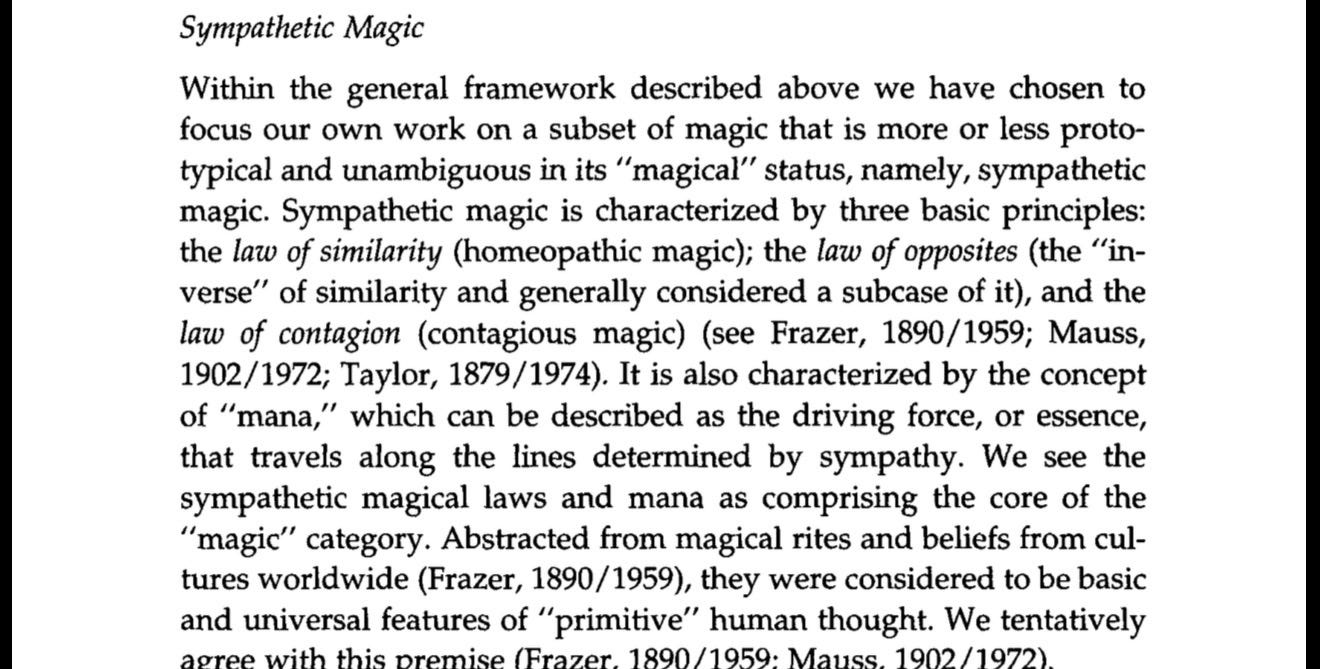
What particularly interested me about this literature: the laws of sympathetic magic contain two laws really, which are the law of contagion and the law of similarity, which also includes the law of opposites. They’re mainly used in terms of consumer research, which is very mundane. But it also chimes with how one of the MAGA founders — Christopher Wylie — came up with the same idea around the same time as Steve Bannon. And then by chance met Steve Bannon on an aeroplane. They got talking and then they founded Cambridge Analytica, which created MAGA — the mana in MAGA as well. I think that’s just an acronym, an interesting coincidence, but I don’t think there’s anything magical or causal about it.
It was Christopher Wylie’s insight about fashion: how your tastes change according to how your chosen leaders change what they’re wearing. And then he thought, what if we applied that to politics? We could change people’s tastes, provoke disgust and really strong emotions in exactly the same way it’s done in the fashion industry.
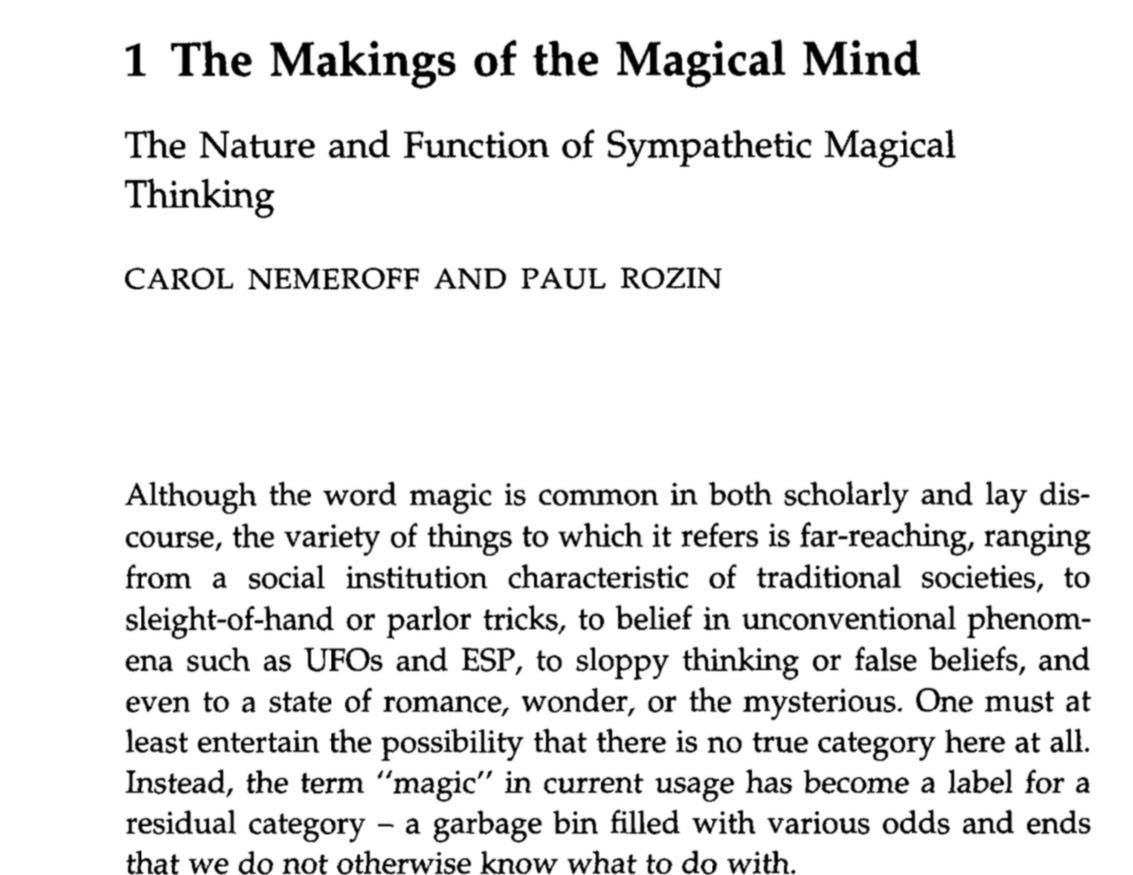
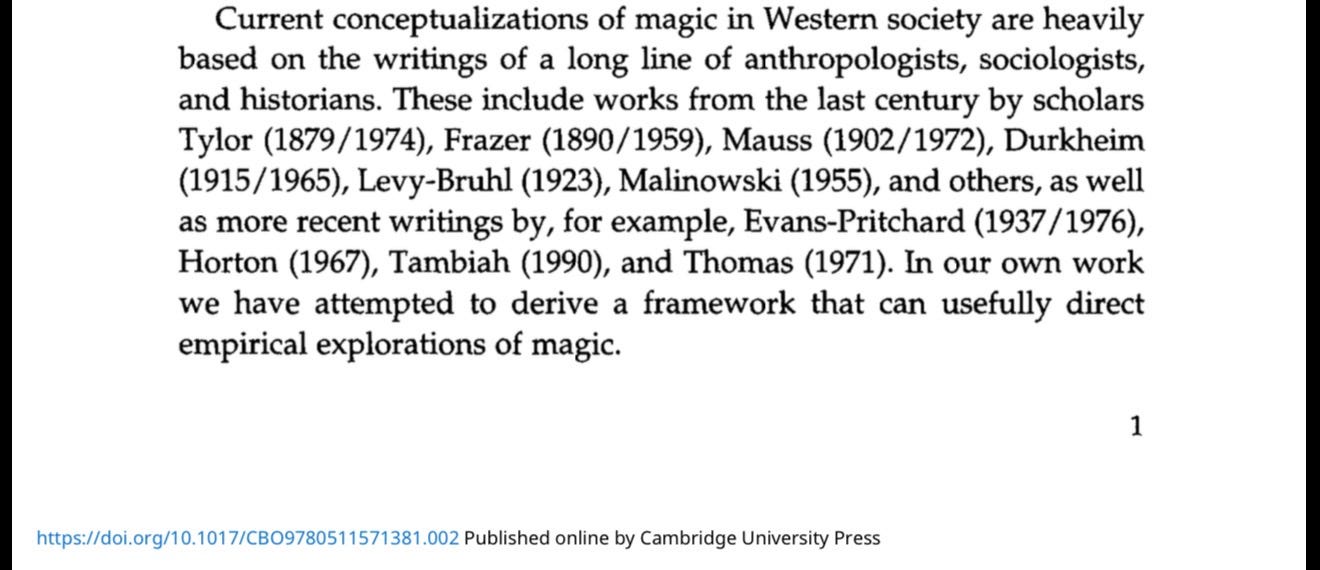
Most of the literature on the laws of sympathetic magic is pre-MAGA. There’s a seminal text from 2019, but it’s not even referencing misinformation and disinformation. So that’s what I’m doing. That’s my innovation.
There have been a few generations of scholars looking at this, and they’ve really examined how contagion is passed between people. The two great scholars, Nemeroff and Rozin — one of whom is at the University of Pennsylvania — they have this idea that the entity producing the contagion is the source (so that’s RT). The entity that has changed as a result of some kind of contact with the source, with the contagion or the mana, the energy, is the target or recipient. And the entity that may intermediate between them is the medium. The medium can be the contagion — which could be us, for instance. If I share a troll, if I share a meme, a linguistic or audible meme from someone else, that turns out to be good, bad or neutral — I’m the medium. The contagion is inside me and I’m sharing it.
There are a couple of dimensions to it, which I think actually all apply to memes. And by memes, as I talked about before, I mean any informational unit, whether it’s visual, audible or auditory, or linguistic and textual. I mainly deal with textual, although most of my textual memes also have a visual component.
**One: Physical contact.** Physical contact is necessary between the source and the target, whether direct or indirect. When a meme goes into your mind, it really becomes part of you. You can’t unknow it, you can’t unsee it. That’s why I usually don’t watch any of these films. There are a few people in the pro-Ukraine information space who are great — I think it’s DefMon, he seems to watch anything. And Chuck Pfarrer — he’ll watch anything and happily describe it for us. I’m quite satisfied with his description. I don’t need to watch a video of 200 people dead.
Although, as a very rare occurrence, because I was trying to make a serious point with my suicide bombing piece, I did share this horrific video. But physical contact in the meme sphere and information space is different from picking something up. When I reflected deeply on it, it is actually kind of the same. It touches me. It goes into part of my body. I could pick up a meme and look at the leaflet as a physical object. But there’s really no difference between that and looking at a meme which goes through my eyes.
The image — again, the M-A-G is in “image” itself — it goes into my brain and affects my intentions, my motivations, my moods, and my attitudes. These four elements I use in the model I use in Disinfolklore as an analytical method: any data artefact, any meme, any informational unit that impacts my moods, my attitudes, my intentions and my motivations — that’s the trigger for understanding I’m being trolled. And then the issue is I have to work out: is this positive, negative or neutral? We all do this thousands, millions of times a day with all sorts of data, whether it’s at work, with our family, our children, with our cats.
What we’re mainly concerned with in the pro-Ukraine information space is Disinfolklore in the sense of the Russian information warfare technique of flooding the zone with lots of stories. Inside those stories is this energy, this mana, which affects our motivations, our attitudes, our moods and our intentions.
But this doesn’t need to be a physical stimulus in the way many of us would think of it. When we’re talking about contagion between two people which might contaminate your mind in a good way or a bad way, there needs to be some physical contact between me and the meme, and then I share it, and then you see it and it goes into your head.
**Two: Permanence.** Once contagion has been transmitted, it is resistant to purification. Indeed, the target may be permanently changed by the contact.
I’m forever interested in the language. For instance, I saw this week — some of us might have seen this — Solovyov was quoted. I think I got it from Anton Gerashchenko. He posted this film of rather old-looking Solovyov. I always have great sympathy for Mokrushyna when she’s trying to pronounce these names.
This is Solovyov talking about Ukrainians and Kyiv: “You’ve no right to be here because you are demons. No, I’ll tell you this — leave Kyiv, it will be easier. You have betrayed your history and your faith. Purification by water and fire.”
This is part of the importance of getting a Disinfolklore perspective, or of trying to access a mythological, religious perspective — ancient Indo-European religions — because the language the Russians use, whether it’s the KGB or the propagandist Solovyov or Dugin, draws on these tropes and images and concepts from religion, from Indo-European culture, and also from pop culture. He’s probably getting this from an American horror movie, or from Ukrainian authors like Bulgakov and The Master and Margarita.
We saw, about six months after the war began, they started appealing to Satan and calling Ukrainians Satanists. In order to critique — in the sense of understand — what they’re doing and have an answer to it, it’s quite helpful if you can get around it and see: “Oh, I see what he’s doing there. He’s picking up these tropes from popular culture and trying to cast a spell.”
President Zelensky also casts spells on Putler, who’s very superstitious. That great video — some of us may remember it — from Victory Day in 2022, when President Zelensky stood in Khreshchatyk, in the very centre of Kyiv. It must have been filmed very early in the morning. He cast a spell on Putin and said: “You’re doomed, because you invoked the souls of the millions of Ukrainians and Ukrainian Jews that the Nazis killed as your reason to invade, and became worse than the Nazis.”
We have this fight at this meta, really meta-meta level on the information space, which I think is actually the essential, the core fight. Everything else is almost ancillary to that, including the violence on the front line, because it is this war between archetypes. Ukraine, as it’s doing now before our very eyes, is re-archetyping itself as strong, as having the power to convince Donald that Ukraine is the good side.
But Solovyov is trying to archetype Ukraine as demons. This idea of purification by water and fire — the idea of sacrifice, which is intrinsic in most Indo-European religions, and the idea of purification of sin — this borrowing of that vocabulary by Solovyov... But it turns out from this literature, they did loads of tests of different ways of contaminating, how to remove contaminants from people: whether it’s a virus, a contagious physical virus like COVID that you can see with electron microscopes, going into people’s bodies, which can be stopped by a physical mask; or whether it’s a meme which goes in.
The idea of purification — we watch cat videos. I saw someone saying today, and it’s so true, I’d watched a couple of cat videos recently, I don’t generally watch them — someone said AI has completely ruined them. And it totally has. So we can no longer use cat videos to purify ourselves.
This is the vocabulary the Russians are using: that they are purifying the Ukrainians by water and fire. Some of you might have noticed in my profile on Twitter: “Mana is permanent. Communicate positive mana.” This quality of contagion as set out in the literature is something I worked out too — that there is this permanence. There are things none of us will ever forget as long as we live about Lisa, for instance. The contagion there has so many different layers: the day it was done, what Russia did, her mother, the photo of her — all of these things are permanent and have a permanent impact on our conscious and unconscious. Therefore, we should be careful.
**Three: Dose insensitivity.** Contagion tends to behave in an all-or-nothing fashion, such that only minimal contact is necessary to accomplish a substantial contagion effect.
There’s this really attractive idea, which is so true. It’s in homeopathic medicine. One account of the dose insensitivity of contagion is that the transmitted essence is holographic, such that each piece of a person, no matter how small, contains the full range of attributes of the source — much like the DNA in each cell.
We see this in Russia. Whenever we say “this is the essence of Russia” — even when I, as I said at the beginning, note that the description of the Russian military in 1854 is quite similar to the Russian military today — I’m using the vocabulary of contagion, of mana. I’m saying there was this essence in 1854, as noticed by The Economist, where the officer would much rather buy a bottle of champagne than buy a greatcoat for his men. No nobility there. And now every day we hear, especially through Mokrushyna or various stories, exactly the same essence is there.
We see it also in individual Russians — whether it’s Putin having a grievance or a real moan about how many times he’s been betrayed by the West — but it’s also in every milblogger. When you hear the subaltern voices from the field complaining about how 99% of the people sent on an assault were killed — this guy who’d made this heroic run across the field where everyone’s dead, across dead bodies, and then he gets back to base and he’s tied to a tree because he shouldn’t have survived — that essence is still in there. It’s not good, bad or indifferent. It’s just there.
That’s an aspect of how in the Russian institution and the army there is this contagion, this energy which has lasted — because we have documents hundreds of years old. If we’re looking for a reason why Russia needs to be encouraged to dissolve, it’s probably this.
**Four: Negativity dominance.** The idea that contagion is necessarily bad. A lot of the literature I read when I first started looking at trolling — what it meant, what trolls are — focused on the negative parts. It focused on what I mentioned a few weeks ago: the Facebook trolling, these horrid people who used to go on the memorial websites on Facebook or Twitter around 2008, 2009, 2010. There was a big phenomenon.
It was always seen as negative, and trolls were seen as dark triad in certain personality inventories: high neuroticism, low conscientiousness, low agreeableness. Obviously many trolls are negative. But I worked out pretty early on that there is something the same — the same energy — in advertising, for instance, as there is in what we consider to be trolling on Facebook.
And there’s something similar, the same energy, the same mana, in you trying to troll your partner into going for a run with you — which is something positive, unless they get a heart attack — or between your cat trolling you into feeding them. It’s the same: trying to provoke an emotional response. It’s not negative. I mean, obviously you’re half asleep and just want to rest, but ultimately it’s another sentient being trying to make contact with you, trying to engage with you, trying to exchange energy with you. It can be described as negative, but it’s not negative. Yet it has a family resemblance to people who are trying to get you to do negative things.
I was interested to see that these two scholars, Nemeroff and Rozin, in the first papers they wrote on the laws of sympathetic magic, talked about it always being negative. But then after 20 or 30 years of research, they found it’s positive too. And they found this great quote — I think from Pittsburgh — from a mechanic. Because they did a lot of social scientific research, asking people things like: “Would you buy second-hand clothes? Would you buy Hitler’s sweater? Or would you buy Angelina Jolie’s sweater?” Trying to work out what it is about... even though it’s washed, a lot of people have these reactions. I have a friend who said he’d never buy second-hand shoes. You have this idea of something contaminating which isn’t there in fresh clothes.
This mechanic pointed out: “A drop of sewage will ruin a barrel of wine, but a drop of wine does nothing for a barrel of sewage.” This is a brilliant example of how Disinfolklore — how a story — can slightly mislead us. We take from this that it confirms the idea that the negative, a drop of sewage, will spoil everything. “This Is Why We Can’t Have Nice Things” was the name of one of the early books I read on trolling, which looked at internet culture, saying trolling ruins everything.
But “a drop of wine does nothing for a barrel of sewage” — that completely goes against what I try to do in my work, through positive trolling. It’s what a lot of us are doing: trying to counteract the bots and the Russian vectors of disinformation, bolster Ukrainian spirit, and maximise the positive impact our elected officials and our countries can have on the future course of the war. If we indulged ourselves with the idea that a drop of wine does nothing in a barrel of sewage, none of us would be on Twitter.
But it’s not just that. With my communications practice of positive trolling — I’ve been testing it since June 2021, when I established this account on Twitter with zero followers and zero people. I haven’t had that much trouble at all from people. It’s been really nice, really positive. In a sense, I’ve empirically tested this idea: that if I try to imbue everything I do with generosity, with ethical discipline, with patience, with tolerance, if I look for the mana in every meme, trying to come up with interesting ways of parsing data, focus on what many of us are focused on and try to make it insightful — those six elements from the Code of Positive Trolls have worked well for me.
If we’re trying to work out what is a positive drop of wine, what is a drop of wine in a barrel of sewage — for me, that’s the Code of Positive Trolls.
**Five: Backward contagion.** Contagious influence can be transmitted in a direction that is the reverse of normal cause and effect. This is a real head-melt. Basically, when Mokrushyna said the other day she was talking about the Taurus missiles and said, “Look, I’m not going to talk about them too much now because I don’t want to jinx it” — this is the idea that we can somehow affect reality across space and across time. I wouldn’t rule it out.
In the laws of sympathetic magic, these are mental models which have been found in many different kinds of minds. First in what they used to call primitive minds — but actually these are little mental algorithms many of us have in Indo-European cultures. So it does have that quality. I wouldn’t rule out that if there is this energy we are tapping into, it can have this impact.
**Six: Late onset.** Contagion is a form of magical thinking that has been grown into rather than grown out of.
As I mentioned last week, I first came across the idea of magical thinking in the context of the Brexiteers who drove the whole of England doolally over six months from January 2016 to June 2016. The BBC platformed them the whole time — these really posh, public-school-educated guys who were always on from the ruling party but pretending to be opposition, telling all sorts of great things that would happen if the United Kingdom left the European Union. Their magical thinking was: “We’re going to abandon 52% of our incoming and outgoing market, and we’re going to get richer.”
Psychologists talk about a stage of children going through magical thinking until they work out cause and effect. But actually, the result of these scholars’ work is — and I’d worked this out myself — that magical thinking is quite a positive thing; innovation comes from it.
What they found was that awareness of contagion and the contaminating effects on clothes and things is grown into in children, not grown out of. It is not manifested in children less than four years of age and first appears in most children ages four or five. At the age of reason, suddenly they become more careful. This has been demonstrated in American, Australian and Hindu Indian children — but again, these are all Indo-Europeans.
**Seven: Universality.** Contagion is present in a great many ethnographies and has recently been demonstrated in hunter-gatherer groups and various others.
**Eight: Different models of contagion’s essence.** For me, my model is mana — I look for the mana in the meme. Contact is universal, but the specific nature of what is transmitted appears to have several variants. They did thousands of interviews over decades to find different models of contagion.
The one I’m most concerned with is obviously memes in the context of disinformation. But there’s also: physical material transfer of germs, where you’re afraid to touch something and scrub your hands; bodily residues and blood, which people get really freaked out about for good reasons; transfer akin to personal spiritual vibes — not impacted by physical purification but more what I mean by mana and energy, a non-material thing that can take on material effect if it’s in a meme, for instance, or if as a result of it you get arrested and end up in prison, or you meet the most amazing person and get married and have children. There is this flow between the physical and the non-physical.
And then there’s a model of symbolic, often public, meaning — do you remember that time Putin kissed the kid’s belly button in public? There’s this religious aspect of trying to pass something on and take something in.
I’ll leave it at that for today. Thank you so much for being here.

This basically involves a few different ingredients into the analytical theory that I invented, which is called Disinfolklore. Disinfolklore is both an analytical theory.
Part Two:
Podcast | How Russia's Mental War Against Us Will Persist After Ukraine's Victory

In 2021 Ilnitsky, adviser to the Minister of Defense of the Russian Federation (2015-2024) stated that the purpose of Russia’s “mental wars” is to destroy self-awareness, change the mental, civilizational basis of the enemy’s society (I’m indebted to Tetiana Boryak of Vilnius University and to InformNapalm for drawing my attention to these quotes by Iln…
It’s also a way of seeing. It’s a description of a new form of narrative. It also is a way of cutting through Russian disinformation and in particular in the context of the Ukraine war.
Part Three:


