


The Poison and the Antidote
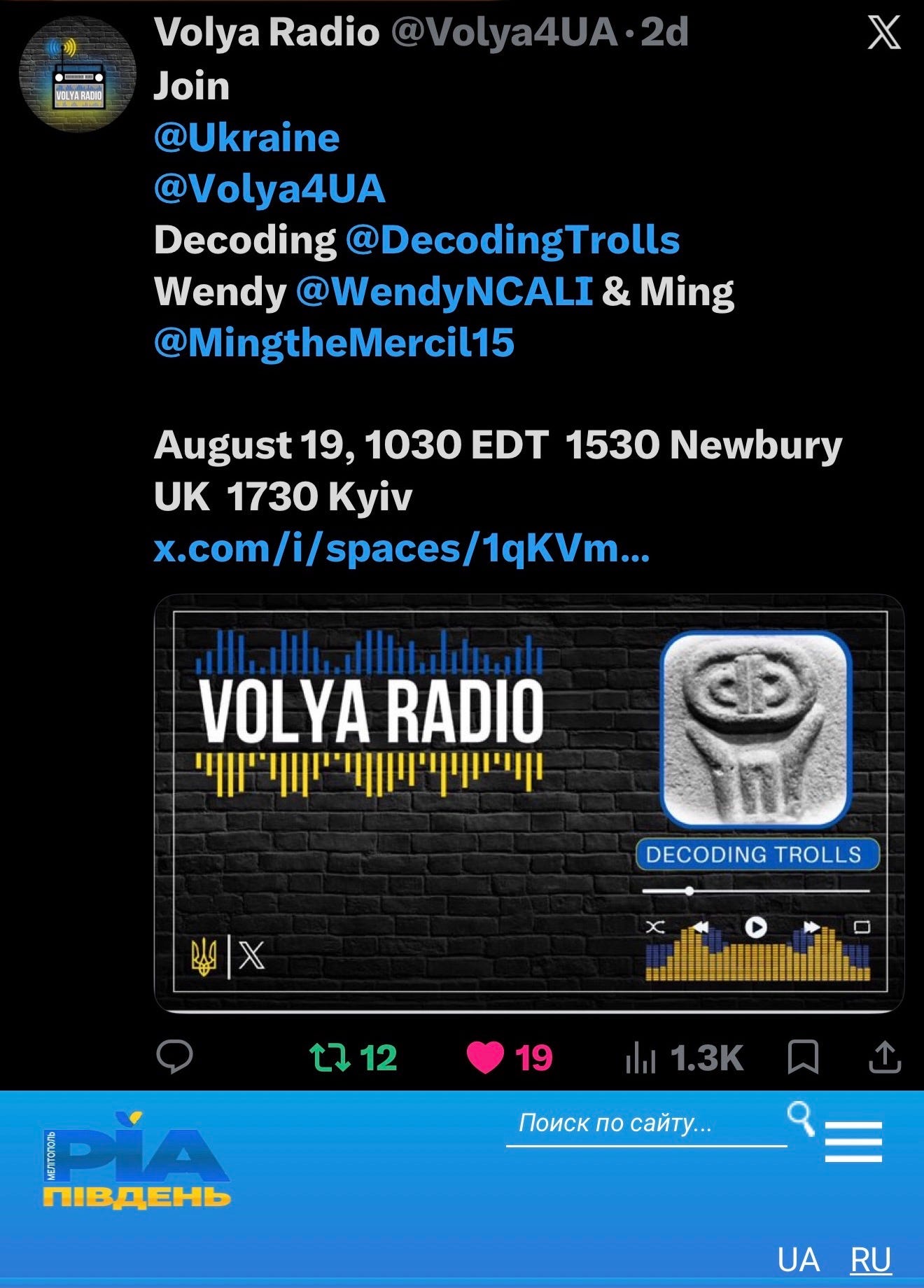
The poison was never hard to find. The poison finds you. Turn on anything Russian and it arrives by the tanker load, free of charge, around the clock. What took months to find was the other thing: the antidote.
Here is what I published on the 22nd of July this year, in a Substack piece called It’s Amazing What Regular People Can Do. One challenge sits under everything: we are swimming in Disinfolklore. Infolklore is scarce.
Two coined words in that quote. Disinfolklore is my name for folklore-like information told with meanness — stories built to bend our moods and our intentions, our attitudes and emotions. Infolklore is the positive kind: true stories, told with generosity, told by someone with real stakes in a real problem.
The first kind, Disinfolklore, is an ocean, and we all swim in it every day, and it’s what motivates all my work. Because we swim in this ocean, I decided to try and work out what this ocean consists of. The second kind turned out to be scarce, almost to vanishing. This episode and this mini-series is the story of the search for it — the search for Infolklore. Months and months and months of failure. The best-loved books in the English language going into a machine, one after another, and coming back stamped: no.
Automating Disinfolklore
And for those who haven’t been listening: what I’ve been working on since January is actualising my long-held plan, which is to automate Disinfolklore detection — and, in our detection, to create an automatic engine that will enable us, in times to come, to plug in a module the way today we may surf the web or look at ChatGPT. In the future we will have cognitive modules. And what I’m trying to build is for the… So that when we are confronted with the vast amounts of information, and information flows that continue to increase, we will have a means of interpreting it really quickly — as quickly as we really need to. And so I call that cryptotypic engineering, or Automating Disinfolklore.
So, my attempts to build this machine. I started off with the 10,000 propaganda items that I collected and hand-coded in Luhansk, which I talk about a lot, back in 2015. And so for much of the year I’ve been teaching a machine to tell the two kinds apart.
Where the search ended was really not in any library on earth. And I went through so many texts and types of narrative, from EUvsDisinfo to war college reports to all kinds of different narrative forms. And the search ended, really, in this room, with Volia Radio. And it ended with you. With us. And this whole mini-series is our own practice — but I’m just a bit part in this, with just this short time once a week. The whole series is Volia’s own practice, read back to us as principles. And this first episode is how I came to be reading the Volia Radio transcripts.
Great thanks to all at Volya Radio for their great support of my work over the years!
Teaching a Machine the Two Kinds
So for much of this year I have been teaching a machine to tell the two kinds apart: Disinfolklore, Infolklore and neutral. A frontier model — one of the big AI systems, the kind that can read a whole archive before breakfast. And you teach it by feeding it specimens. What I’m doing is creating training pairs for a locally held large language model. Well — not, I mean, it’s locally held, but it’s held in a data centre somewhere; but it’s proprietary.
And here is the real Disinfolklore, and you learn its smell — which I first scented when I was in Russia-occupied Luhansk in 2015 — and real Infolklore, teaching the computer to learn the smell of it, the scent. And half of the job has been relatively easy, in the sense that I’ve managed to gather together a corpus of hundreds of millions of artefacts in Ukrainian, Russian, Chinese: hundreds of millions in each of these languages, and in Hindi, in Dravidian languages, in MAGA language. So that gathering together, that corpus, was relatively easy — the easy half. The graph tells us something about the world we live in, which won’t be a surprise to any of us on Volia Radio, but it also tells us about my motivation in all of this work, which is to try and do something active about it. And I’ve been on this task in various forms since 2015, as I gradually worked out what was going on.
Podcast | The Plight of the Sorcerers: Putler and the Chef, Zelensky and Fedorov; and

Putin’s Chef Problem: The Plight of the Sorcerer
And here is how I described the task to you last month. Finding real Disinfolklore to train on is easy — everything we hear from Strelkov will do. We’re going to kill you all. Basically. Finding clean Infolklore turned out to be the hard part. I’ve spent months feeding every kind of text to the frontier model I work with. Sherlock Holmes; even — maybe Ming will appreciate this — P.G. Wodehouse. None of it passes muster.
The Reject Pile
Wodehouse had company in the reject pile. Sherlock Holmes went in, failed. War college reports went in, failed. The Battle for Kiev study — which I’ll get to in my Outflank Dugin, Don’t Rebut report — towards the end, the Battle for Kiev study done by John Spencer, a friend of the channel, did go in. And that was really my only piece of archetypal Infolklore: a serious piece of military analysis, by serious people, about the defence of the capital.
But what I’m trying to do is build a system that will recognise the archetypal content in any sized lexical unit. And so it needs to be really flexible, and needs to be able to be trained on lexical units which aren’t all in the same format. So that particular war college report gave me a lot of hope — but then I tried others, and it just didn’t work.
The EUvsDisinfo stuff didn’t really work. And for the same reason that an academic from the information school in Melbourne found that fact-checking doesn’t work: because it’s a different narrative form. You have to counter magic with magic. So if Disinfolklore manages to meld itself into our minds and alter our intentions and our moods, our attitudes and our motivations, through a means that most of us don’t really understand or can’t detect in real time, then Infolklore — which is a creative practice rather than a countering practice — has to do the same thing. And fact-checking just doesn’t do it. So there’s a lot of value in EUvsDisinfo’s work; it’s the format it presents.
And so my own witness writing went in. It failed too. And it failed in its own particular way. The person who named the framework — me — cannot be its neutral witness. And so, I built the instrument; I cannot also be the specimen that calibrates it. There I sat, month after month: a machine hungry for the positive kind, and a whole civilisation of shelves unable to feed it. Conan Doyle could not feed it. The finest comic novelist in the English language, P.G. Wodehouse, could not feed it. The war colleges of two continents could not feed it. And I could not feed it myself.
The Wodehouse Failure
The Wodehouse failure deserves its own telling. And for those who aren’t familiar with P.G. Wodehouse, he wrote about a hundred — 110 — about the relationship between Jeeves and Wooster: a slave owner, or rather a gentleman, and his servant. And it came closest of anything. And the way it fell short taught me, really, what Infolklore actually is, in some respects.
On the 19th of May I proposed to the frontier model the Jeeves and Wooster series as a training corpus for the positive kind, for Infolklore. I was confident that if any books in the English language were going to pass, it would be these sunlit, kindly, perfect books. And the adjudication that came back was, on its face, glowing. Jeeves is archetypally saturated: he’s the trickster servant, the clever slave of Roman new comedy, a figure the stage has carried for more than 2,000 years, still quietly running his master’s life. Bertie Wooster is the holy fool, the indulged innocent, whom the plot punishes and protects in equal measure.

When I say archetypally saturated, I mean the stories are full of the old shapes — characters folklore has kept alive for millennia because they do something for us. And on the Code of Positive Trolls, Wodehouse passes everything: generous on every page, patient, non-coercive. Nobody in those books is ever mean to anybody. Temperamentally, Wodehouse is the exact opposite of Disinfolklore. Yet still, it had to be turned away.
And I felt this refusal personally. Those books have been friends of mine for decades. I turn to them in times of stress and difficulty because they’re so light, they’re so easy to read, they’re so pleasant, they’re so joyful. But the machine had a reason, and the reason was right. One leg was missing: real stakes. Nothing in Wodehouse refers to a real problem in the real world. Nobody in the Drones Club is under fire. Aunt Agatha, terror that she is, never shelled a city. The stories are true to human nature, and true to nothing that is actually happening to anyone in the real world.
That near miss sharpened the definition. And here it is, the finding that the whole season, the whole search, paid for. Infolklore must be true. It must be soaked in the old story shapes. And it must be told by someone with real stakes in a real problem. All three legs, no exceptions — not even for Jeeves.
Lexical Units, and the Twelve Tools
Those of you who are interested in the Disinfolklore analytical method can look at disinfolklore.eu, my main site. The twelve tools, the twelve-tool way, goes into detail there on each of the different elements in the Disinfolklore analytical method. And that is essentially what I’m looking for in lexical units. When I say lexical unit, I mean a sentence, a word, of any size — and it could be a 20,000-page article, or a one-page article. What I’m building must work, must be sensitive enough to work on every kind of lexical unit, and indeed on images themselves. So that’s the goal I’ve set myself, and it may take me years.
The Code of Positive Trolls
So, the code, plainly. I keep saying passed and failed, so you’re owed the test itself. The test is the Code of Positive Trolls. I trademarked it in February 2020 with the European Union trademark body — both Code of Positive Trolls and Positive Trolling. And I established a Twitter account in February 2020 as Positive Trolling, and then I switched, changed the name, in May 2021, when I started actually… So I trademarked the Code of Positive Trolls as a moniker in February 2020, two years before the full-scale invasion, and it’s been the engine of everything I’ve done intellectually since.
And here is how I put it in a February piece called Archetyping Bad Faith. There’s a key core module in the Disinfolklore analytical method, which is what I call the Code of Positive Trolls. It has six elements. The second element is ethical discipline, or right. The first element is generosity. Six practices — they’re old practices, far older than any of us or any of our languages — carried into the information battlefield. In plain English, they are these. Generosity: you give more than you take, and you protect people from harm. Ethical discipline, or right: you tell the truth, and you hold yourself to the rules you would hold anyone else to. Patience: you can wait, and the waiting does not sour you. You actually notice what is in front of you.
Say them once, because the whole series hangs on them: generosity; ethical discipline, or right; patience; Mana, or energy; focus; and insight.
The word trolling frightens nobody in Volia Radio. But for newcomers: in my book, trolling is any emotion-moving activity of body, speech or mind. Any. Advertising is trolling. Courting is trolling. A joke between friends is trolling. The question is never whether someone is moving your emotions — everyone is moving your emotions, including yourself. The question is: which kind of a troll are you?
And the test takes all six practices at once. Fail any one, and the story falls to Disinfolklore. Whole — there’s no partial credit. In practice, the place where the bad stuff fails is nearly always the same. They’re almost always negative trolling. They lie a lot, and so fail especially the second limb in the six tests: ethical discipline. I wrote that in November 2022 on Substack, where — disinfolklore.net, powerofmana.net, which is the linguistic element of my work, and decodingtrolls.net — you can subscribe.
For the record, the formal definition of the poison in one breath. Disinfolklore describes stories, however delivered, that communicate meanness with a view to altering the moods, intentions, motivations and attitudes of their consumers in ways which satisfy the strategic demands of Disinfolklorists. Hold on to that little four-part engine: moods, intentions, motivations, attitudes. That’s where every story does its work on us. Both kinds work there. Only one of them works there with your interests at heart.
The Breakthrough
So, the breakthrough. Months in. Holmes rejected. Wodehouse turned away. The war colleges bounced. And one day I stopped feeding the machine literature and news, and served it one of the Volia shows instead — whole, as broadcast. The timestamps, the jokes, the swearing, the cat. The cats. Isn’t it interesting and curious that all three of our daily broadcasts — Will’s, Mockers’ and Firefella’s — have cats who sometimes meow? And today Mockers’ cat meowed, and my cat paid attention to that meow. I digress.
So Will was on, and Will told the tale of the Russian general who was shot in a lift while visiting his mistress. Some of you might remember that morning. And Will, en passant, dropped this line: you could say he died of a lack of family values. The machine’s verdict came back immediately: archetypal Infolklore. First serving, first listen. The thing that Conan Doyle and Wodehouse and the war colleges of two continents could not produce, Will produced en passant, in one sentence, on a weekday morning.
And here’s my published gloss, word for word. That is perfect Infolklore rapping. It’s what Volia does every day — what all of you do. That one joke is doing three jobs at once. It’s true: the general was really shot. It is archetypal: the mighty man undone by his own appetites is one of the oldest tales our species tells; it’s older than writing. And it’s told by people with everything at stake.
In truth, the machine was confirming something already noticed. Back in March I made a recording about one of our own, and its title says it all: Archetypal Infolklore, Mockers. From March 2026. The pattern held every single time a Volia show went in. Every time. The needle that months of literature could not move went straight to the top of the dial for Volia.
Think of the company you beat. The greatest detectives in fiction. CNN. Fox News. Every newspaper in the world. Al Jazeera. Anything I could find. YouTube — guys on YouTube. The finest comic prose in our language. And a morning Space with a bad back and a cat, running on donated time, cleared the bar they could not touch.
There is a mechanism underneath this, and it earns one more receipt, because it explains how the same war story can be poison in one place and medicine in another. The same story which is Disinfolklore when published on Telegram by the Ruschists can be Infolklore when told by Mockers — Mockers’ mocking tone. I wrote that in January 2026, in Pensées 126 on Substack. The content can be identical. The kind is decided by the telling: by tone, by intent, by discipline. Which is exactly why this community can retell enemy material all morning and be practising Infolklore, while the original published… And that is you. That is this room.
RIA-Melitopol: The Same Verdict, at a Cost
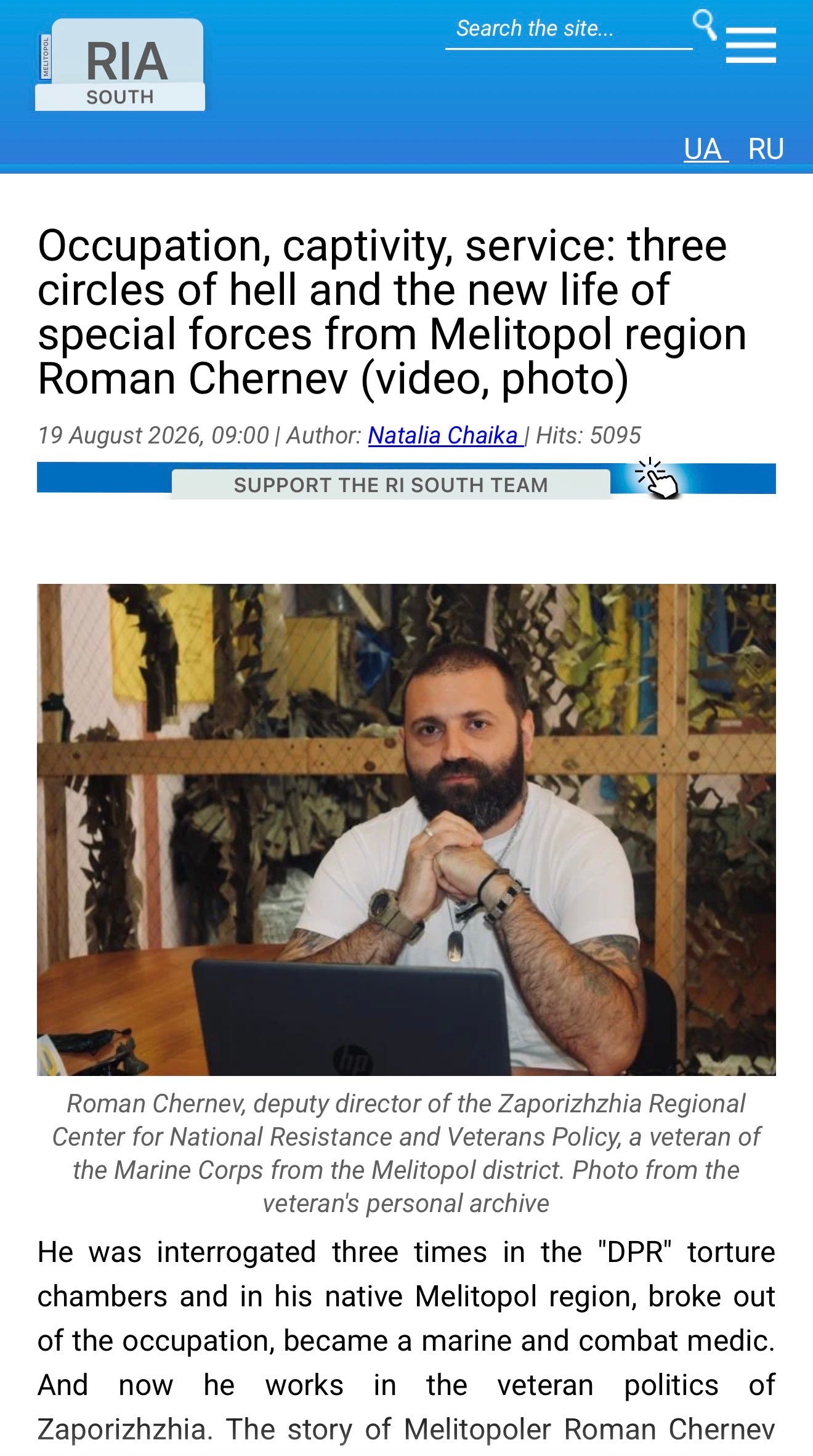
One other source had already earned the same verdict, and earned it at a cost none of us here has paid. RIA-Melitopol, the news channel of the occupied city, ruled archetypal Infolklore in May 2026. I had spent the first months of the year of the war reading RIA-Melitopol and trying to amplify their information. I used it as leads when I contributed as the only named main source in the international community’s first report on crimes against humanity and war crimes in Ukraine, which was published on the 9th of April 2022 by the OSCE’s Moscow Mechanism mission, commissioned by 40 nation states. And I’m acknowledged as one of the main sources at the beginning, and a lot of the leads I got, I got from RIA-Melitopol — and that entire report, with the exception, really, of the drone safaris, which nobody imagined would come, although some of us imagined such terrible things might arise from an urge to finish off Russia early on, before things like drone safaris arose.
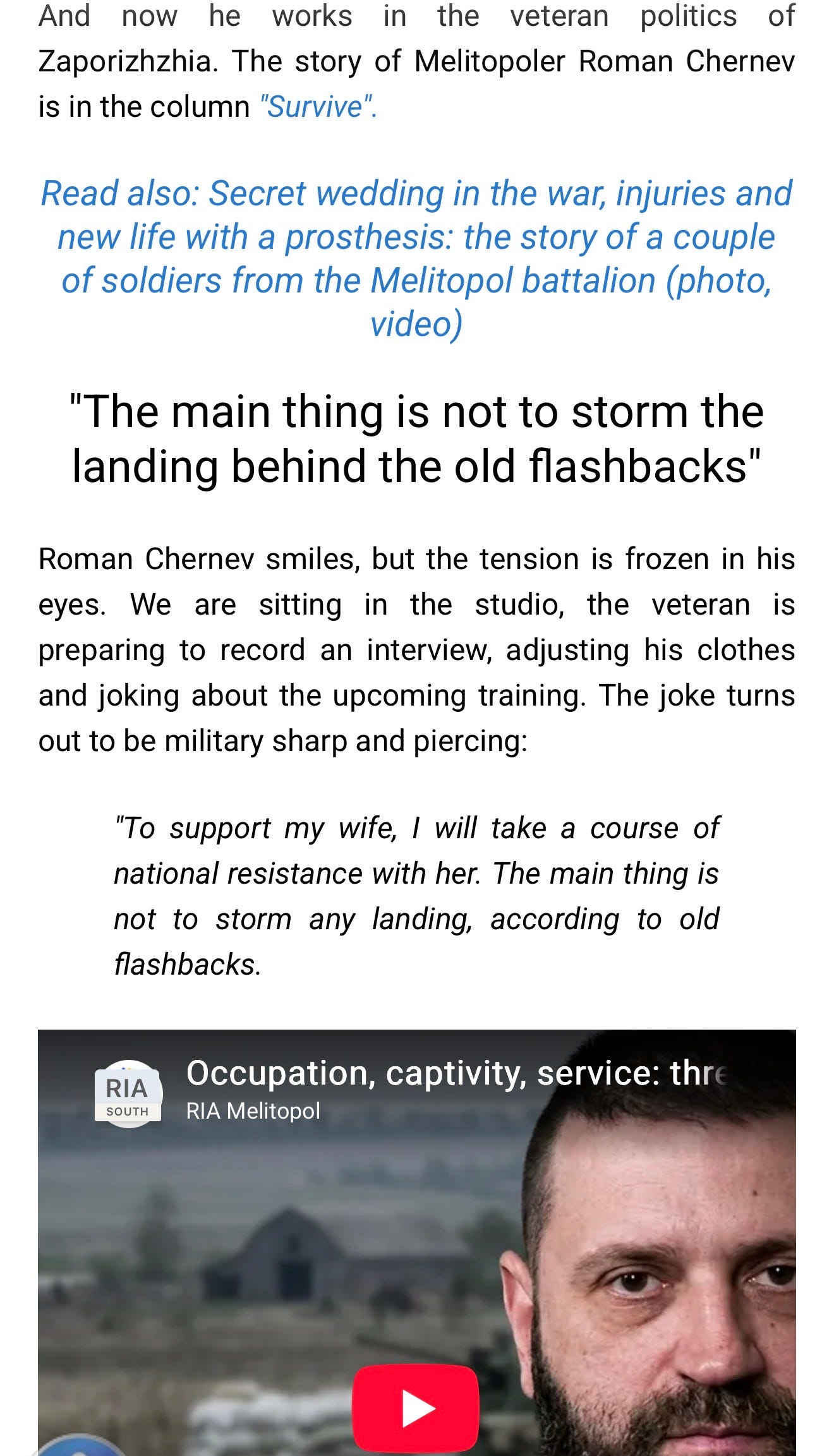
But RIA-Melitopol — and I’ve continued to read it now; it’s called RIA-Pivden and it operates out of free Zaporizhzhia city. And every morning, alongside Volia shows, the city of cherries, Melitopol, speaking up under occupation: terse, coded, written by people who can be arrested for writing it.
The occupation apparatus told the world what that channel is worth — as did The New Yorker, when it featured a story about it in June 2022. The occupation apparatus told us in March 2022, in its own language, which is the language of hostage-taking: armed men came for the channel’s editor, and when they did not find her at home, they took her 75-year-old father. Then came the offer. Look at what they wanted. They did not try to silence RIA-Melitopol. They tried to buy it. The fake mayor of Melitopol promised its editor a glittering Moscow career in exchange for the outlet. She refused. The channel has trolled and tortured — metaphorically speaking — the occupiers relentlessly ever since.
The two kinds of story are the same instrument pointed in opposite directions, and the enemy knows it better than anyone — which is why the enemy tried to purchase the instrument rather than to break it. And the final episode gives that story whole, with the record beside it. RIA-Pivden’s, or RIA-Melitopol’s, morning posts and Volia’s morning shows are doing the same work, and have been doing the same work for years. And neither room knew the other existed. That channel’s practice sits beside Volia’s through this whole series, and in the final episode the two meet.
The Scale of the Thing You Have Built
So the search ended in this room — metaphorical room, the Volia room — and then the reading began. The numbers first, because you should know the scale of the thing you have built. 1,121 shows. 3,203 hours. If you sat down today and listened without sleeping, you would stand up in the spring of 2027. All of it is now transcribed into a text a machine can read: timestamps kept, the mishearings and mid-sentence repairs left in place.
Out of that reading come principles. And a principle at this stage is a modest thing: a practice you actually perform, described plainly, with the receipt attached — the show and the minute where it was done. Not a statistic, not a measured claim: a description offered back to the people who did the thing, for your own judgment. You are the source. You are also the judges. The machine reads at a scale no human can, and that is all it does. It is not, and cannot be, the decider. The noticing came from you, and the judgment goes back to you. If I have described the practice wrongly, you will tell me. Correction will be worn the way this community wears corrections — which is a story for the next episode.
Eight Families of Principles
So, eight families of principles came out of the reading of just 400 transcripts — and Firefella’s morning shows, and also Ming, and Awana, and Will, and Yeni, and all of you, with Heather obviously in the background. Heather, and others, who make the whole thing and keep it going. These map the episodes of this mini-series.
One. Truth discipline: how this community handles the truth, hardest always on its own side. It gets two episodes, because it earned twice the weight of any other family. The second element in the Code of Positive Trolls is right, ethical discipline. That’s why. First, the discipline you turn on yourselves — the corrections thanked and counted, the good news quarantined, the bad news aired at once. Then the toolkit you hand every listener, because these shows do not just verify, they teach: they teach verifying.
Second principle: law and legitimacy. The standard is international law, argued out loud constantly, every show, target by target — and the stated destination of this whole war is a courtroom in The Hague.
Third principle: death and dignity. How the dead are carried and named, one ledger for the victim and another for the aggressor, and how memory is defended against the deadliest thing of all: getting used to it.
Four: naming and renaming. Absurdistan, the fake mayor, the pseudo-referendum — and what a name can do before a single claim is even argued.
Next, the comic register: why the laughter works, where it stops, and the receipts that sit underneath every joke. One flash of it from Mockers this month: traditionally, no casualties, as per usual; so, you know, just to note, that it’s just that terrible debris again.
Community and hearth: the daily liturgy, the roll-call of place names with Kyiv always in the roll, the pirate ship, the antiphon said imperfectly and said anyway — the whole vessel that reassembles a scattered world into one room before the first item of news is read. You know the sound. You built the sound.
Next principle: generosity. The money, the fundraising, the shotguns bought and driven, the ambulances, and all the work done for all of the people helping on the ground in the war. The rule that the station keeps nothing for itself. As an aside, I regretted that we didn’t have access to the first two years of Mriya Report. But then I remembered: the hosts of Mriya Report determined so much of what we said, and cut us off when we mentioned things like Brexit, or when we criticised things those quite sterile hosts wanted us to say. There was very little Infolklore in Mriya anyway. So Volia managed to free us all from those constraints, and I no longer regret not having access to those data streams.
Occupied voice: the register of a city that keeps saying its own name in the present tense. Melitopol is Ukraine. Not will be — is. The series finishes where those last threads join: an occupied city, and a diaspora radio that never met, converging on the same practices from opposite ends of the same war. Different language, different length, different risk — the same rules. When two rooms that have never spoken arrive at the same rules, the rules are telling you something.
So that’s the first episode.
Episode Two: Hardest on Ourselves
It’s wrong to say I’m impartial, because I’m very partial. I know right from wrong. But you can still report correctly, not put the gloss on things. That was said on the 24th of February, in the marathon episode to celebrate — or commemorate, rather — the anniversary marathon.
It’s one sentence long, and it’s the constitution of everything I found in this family of practices. Just the order of it. The side comes first: I’m very partial, I know right from wrong. There’s no pretence of a view from nowhere, no newsreader’s mask — and this is what adulterates every other source, that. In the same breath, the obligation: you can still report correctly, not put the gloss on things. The side is declared, and the accuracy then runs against the speaker’s own interest. That’s the principle.
Infolklore: true stories, told with generosity, by people with real stakes. Disinfolklore is the negative pole: stories which communicate meanness to bend our moods, our intentions, our motivations and our attitudes. And the gate between them is the Code of Positive Trolls. Six practices: generosity, which is giving without meanness; ethical discipline, which is keeping the record true; patience; joyous perseverance, or Mana, or energy, which is keeping going and staying glad about it; focus; and insight, the noticing itself. The gate takes all six. Fail one, and the story falls to the other pole. The practice that fails most often out there in the wider world is the second one, ethical discipline, or right. So this episode and the next are about how… The next episode is the toolkit.
The Smallest Grain: One Clause Checked
I could throw in a couple of tart comments about late-stage capitalism, but actually… I don’t think that’s accurate, because what Russia is practising isn’t capitalism.
The joke was free, the applause was waiting, and it went in the bin, in real time, on air, because it wasn’t accurate. That’s ethical discipline at the smallest grain there is: one clause checked against the world.
The Direction of Error Rule
Now the second grain, and this is the one I contend is the signature of the whole community. Call it the direction of error rule: whatever flatters our side carries the heavier burden of proof. Good news is quarantined until it develops. Bad news airs at once. Here it is stated as policy, on Accidental Ukrainian: when good things happen for Ukraine, I’m usually slow to talk about them, to make sure that they fully develop; when bad things happen, we talk about them right away. That was from September 2025.
Read that against every propaganda operation in history. They all run the other way: their good news sprints, and their bad news suffocates. Here the delight and the quarantine arrive in the same sentence. Listen to Mockers receiving a gift of a story: oh, what absolute golden news, it’s just beautiful — but of course we’ve got to wait for confirmation from everybody and everywhere. September 2025, on Booms and Woe. Golden news, and the brakes go on before the sentence ends.
And the community names the trap it is defending against, names it exactly: one of those stories that’s too good to check; when I read it, I believed it immediately. From Accidental Ukrainian, January 2026. Too good to check. When I read it, I believed it immediately. That is the confession of every one of us who’s ever shared a story because it felt right. The difference here is what happens next: the wanting itself becomes the alarm. I mean, for me, I know that right at that point I have to step back, and have to double-check sources, and see — if it is just because I want it to be, doesn’t mean it’s going to be. That’s Accidental Ukrainian, March 2026. Just because I want it to be doesn’t mean it’s going to be. The strength of the desire is the trigger for the hardest verification.
And it’s not theory. It fires on air, on the very clips the whole timeline is flying around. And the next episode holds a full specimen: a viral clip that flattered Ukraine, 175,000 views, debunked. The rule even governs the tally of enemy aircraft. A missing man is not a dead man. A self-crashed jet is not a kill. And a friendly success gets capped in the very breath that delivers it: but two out of nine, not brilliant, but not completely useless either. Booms and Woe, November 2025. Two out of nine, not brilliant. Nobody rounds it up.
The community knows exactly why it pays this price. The economics of it were stated outright on Ukraine Chat: if you’re proved to be an honest broker and giving honest news, then people are going to continue believing you — rather than if you’re going to be crying wolf all the time, exaggerating all the time, then people are just going to get pissed off and go, you know, I don’t believe a thing coming out of your mouth. That’s from October 2025. Credibility is the asset. Every inflated count spends it. Every quarantined golden story banks it. Four years in, this community is rich.
The Third Grain: The Tribe Itself
Now the third grain, and the hardest one: the tribe itself. The audit turned inward, and each host is hardest on their own country, with numbers attached. Here is the specimen, and I give it to you whole, because it’s a masterpiece of the form. We’re total shit. We’re shit. We raised $37.3 billion in 2024 to 2025 alone, and we’ve given $1.5 billion in aid the entire four years. That’s dog shit, Yeni. Booms and Woe, November 2025.
That is a host talking about their own country. $37.3 billion raised. $1.5 billion given across the whole year. The numbers are attached. The verdict is unprintable and exact. No enemy gets audited harder on these shows than the speaker’s own flag. And that is what keeps the support credible rather than hagiographic.
And beside the inward audit sits its twin, the competence rule. Contempt for the enemy stays moral. It never becomes intellectual. Here it is in one line: so we’ve got to remember that they aren’t fucking stupid, they’re just bastards. That’s September 2025. Bastards, yes. Stupid, never assumed. Because the moment you sneer at your enemy’s brains, you corrupt your own threat assessment, and your information starts working on your moods at the price of your judgment.
So the enemy’s real advantage gets named plainly, even when it hurts. A weapon as part of the drone wall is the fibre-optic FPV, and unfortunately the Russians still maintain a very large qualitative advantage in that category. That’s Will, with Grandpa Roy, December 2025. A very large qualitative advantage — conceded without flinching. That sentence protects Ukrainian lives. Flattery on that point would cost them.
Corrections Worn as a Badge
So what happens when the discipline slips? Because it does; everyone errs. And here is where this… Thank you, Daniel. I’m happy to stand and correct it. October 2025. Thanked. Not resisted. Not buried in a follow-up post nobody… Thanked by name, on air. And not just thanked — counted.
The show’s own feed announced one episode like this: this includes an on-air correction from Will (his fifth, for those of us who are counting). Booms and Woe, then Will and Ming, October 2025. His fifth, for those of you who are counting. The tally is a running bit, a running joke the whole audience is in on. Fallibility, credibility — converted into a joke, and the joke into a bond.
Correction is invited back in the same breath it lands: keep us honest, I really welcome that; yes, I stand corrected. This Week in Absurdistan, then Booms and Woe, May 2026. And the discipline runs even where the correction helps the other side, even into the enemy’s legal position: I just wanted to correct the record, in case, you know, they go after us for defamation. Booms and Woe, October 2025. That is the exact place a proper… A community that has understood something simple, and once said it out loud: changing your opinion when facts and evidence present themselves is not normally considered to be a major fault. January 2026, Booms and Woe.
I contend the mechanism here is worth naming. An operation built on deception — so it would violate the second element in the Code of Positive Trolls, which is ethical discipline, or right — an operation built on deception cannot pay out on error. If your operation runs on lies, every admitted mistake is a structural crack. So you admit nothing, and your record silently rots.
Remember, I said I trademarked this in February 2020. Anyone can look it up: EUIPO. Look up Positive Trolling and Positive Trolls. And so this philosophy which you follow — you and Volia follow independently, obviously, of me and my influence — but it is the same thing, the same phenomenon, the same aspect of information warfare that I identified in February 2020, that everyone in the Volia community also identifies, has identified, even if they don’t name it, and integrates into everything we say on air.
A community running on truth can pay out freely. Each correction costs a moment of pride and buys a permanent record. That’s why a correction thanked and tallied is a ceremony of trust, and not a humiliation. It is the audible sound of the book’s balance.
Inside the Single Sentence
The same discipline goes finer still, down inside the single sentence. On these shows, epistemic status travels with the finding, per item, in front of the conclusion. And when something is invented, it is labelled as invention before the sentence can finish its work. My favourite specimen in the whole corpus is a joke interrupting itself: unconfirmed sources — ha ha, this is a joke, this bit — unconfirmed sources point to Steven Seagal. That’s from December 2025. Ha ha, this is a joke, this bit. Mid-sentence. A fabrication offered for laughter inside a sourced segment, and even that must not travel one clause without its label.
The official hedges get kept in rather than smoothed out, and the keeping-in gets celebrated. According to preliminary data — oh my goodness, I said it — as of 8.30 this morning local time, air defences shot down and suppressed 58 of the enemy drones. Booms and Woe, then Will and Yeni, December 2025. Speculation carries its own tag: just my fan fiction, June 2026. The source’s reliability is graded in the same breath as the story it carries: it’s uncorroborated, however, it’s kind of a crazy one; I need to look up the exact quote. Sunday Morning in Ukraine, 18th of July 2020. Five words: I need to look up the exact quote.
Hope Rationed by Evidence
A lot of people think, oh, it’s going to be okay, we don’t need to do anything now. That’s the problem. Exaggeration breeds complacency. And that’s a bad thing — also on the flip side, obviously, dooming too much. Then people just go, well, what’s the point? And they don’t advocate either. So you have to be grounded. Ukraine Chat, October 2025.
Despair demobilises now; euphoria demobilises later, when the promised date passes and nothing happened. Both are avoided. So the war’s trajectory gets described in deliberately unglamorous figures: it’s not going to be a knockout, it’s a strangling motion, it’s a suffocating motion. No date, no knockout. A strangling motion moves morale without writing a cheque it cannot cash.
When a forecast gets made, it comes with thresholds, and its working shown: Russia could possibly lose between 8 to 15 brigades in the next 3 to 5 days, and that’s not me being optimistic, that’s not copium, I’m running the numbers. Accidental Ukrainian, September 2025. The threat is conceded: it’s all possible, even the tactical nukes, it’s possible; then there’s a greater-than-zero chance that it will happen this week. This Week in Absurdistan, 12th of June 2027.
The Occupied Register
I want you to hear the occupied register of this same practice, because the pattern this series ends on begins here. RIA-Melitopol, the channel of the occupied city, posting under the aggressor’s guns in February 2023. Germany and Ukraine: Germany handed over generators and medical equipment to Melitopol; together we are preparing for life after de-occupation. February 2023. I remember that. I amplified that text myself.
Generators staged for a day the post does not name. That is hope in the occupied register: no date, no promise, just the equipment ready. Preparation spoken in the present tense. Liberation never given a deadline it could miss. Rationed hope is the only kind that survives contact with a long war, and it’s the only kind that keeps perseverance joyous, which the code demands, for years on end. You cannot stay glad on hopium; the crash always comes. You can stay glad on evidence.
The Four Practices, Side by Side
So, gather the four practices side by side. Partiality avowed, and accuracy run against interest. Corrections worn as a badge. Uncertainty spoken with the finding. Hope rationed by evidence. One discipline applied at three grains, and the harder check always falls on the flattering side.
I’ve listened to hundreds of hours — as all of you have — of all of you, and all of us, doing this, or trying to do this. Not on special occasions: every day, every morning, as routine, the way other stations do the weather. And when I want to hear the whole… I’ll leave it at that for today.

Podcast | The Plight of the Sorcerers: Putler and the Chef, Zelensky and Fedorov; and
Putin’s Chef Problem: The Plight of the Sorcerer


